ADHD Brain Differences: What Science Says About Focus, Scans, and Daily Life
Searches for the "ADHD brain" often come from a very human question: why can focus, motivation, time, and follow-through feel so uneven? The short answer is that ADHD is linked with differences in brain development, communication networks, and chemical signaling, especially in systems that support executive function. The longer answer is more careful. Brain research helps explain patterns, but it cannot turn one scan, one online quiz, or one hard week into a final clinical answer. If you are trying to organize your own observations, adult ADHD self-reflection tools can be a private first step before deciding whether to speak with a qualified professional.
What people mean by an ADHD brain
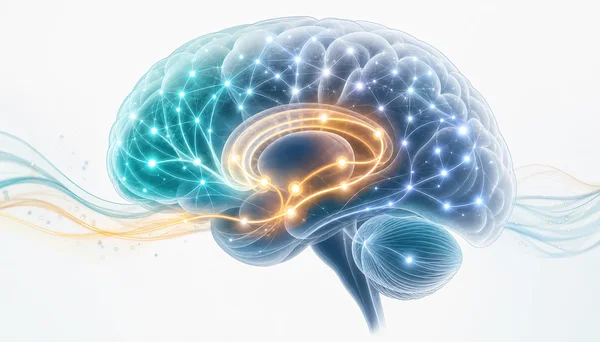
"ADHD brain" is a shorthand, not a separate kind of brain. It usually refers to patterns researchers have observed across groups of people with attention-deficit/hyperactivity disorder. These patterns may involve brain areas that help with planning, attention, impulse control, reward, movement, and emotional regulation.
ADHD is often described as a neurodevelopmental condition because symptoms begin in childhood, even when a person is not assessed until adulthood. That matters because the issue is not laziness, intelligence, or moral effort. The problem is more often a mismatch between intention and the systems that help convert intention into action.
For adults, this can show up as starting tasks late even when the deadline matters, switching between tabs without meaning to, losing track of belongings, feeling mentally restless, or finding it hard to stay engaged unless a task is urgent, novel, or personally interesting. The brain explanation does not erase responsibility, but it can make the problem less mysterious and more workable.
ADHD brain vs regular brain: useful idea, imperfect phrase
People often search for "ADHD brain vs regular brain" or "ADHD brain vs normal brain" because comparisons make a complex topic easier to picture. The comparison can be useful if it means, "What systems tend to work differently?" It becomes less useful if it suggests that one brain type is normal and another is defective.
There is no single standard brain. Even among people without ADHD, attention, motivation, memory, sleep, stress tolerance, and emotional regulation vary widely. ADHD research looks at averages and probabilities across groups. That means a study may find differences in a brain region, network, or chemical pathway across many participants, while any one person's brain may not match the group pattern neatly.
Some studies have reported differences in total brain volume, cortical development, white matter pathways, or activity patterns in areas involved in executive control and reward. These findings are important for research, but they do not mean someone can look at one image and read a person's daily life from it. The most practical takeaway is simpler: ADHD tends to involve regulation systems, not a lack of caring.
Brain systems most often discussed in ADHD
The ADHD brain is usually explained through a few interacting systems rather than one single location. That is why ADHD can affect focus, movement, time awareness, emotion, sleep, and motivation in different combinations.
Executive control and the prefrontal cortex
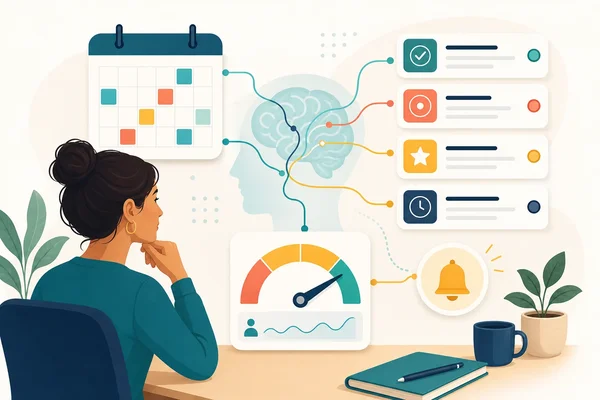
The prefrontal cortex helps with planning, organizing, holding goals in mind, delaying impulses, and choosing what to do next. When people describe adult ADHD as an executive function problem, they are often talking about this kind of control system.
In daily life, executive-function strain can look like knowing exactly what needs to be done but still being unable to begin. It can also look like making a careful plan, then losing the plan once a new stimulus appears. This is one reason an ASRS-based screening experience focuses on patterns of attention, impulsivity, and organization rather than asking whether someone simply "tries hard enough."
Reward, motivation, and the striatum
The striatum is involved in reward processing and motivation. Many people with ADHD describe a strong difference between tasks that are interesting and tasks that are important but dull. A person may spend hours on a hobby with intense focus, then struggle to send one routine email.
This does not mean the person only wants fun. It may mean the brain's reward and activation systems respond more strongly to novelty, urgency, challenge, or immediate feedback. Practical supports often work best when they add structure, visible progress, shorter intervals, or external reminders.
Attention networks and task switching
Attention is not one spotlight. It is a set of networks that help the brain select what matters, suppress distractions, shift between tasks, and return to a goal after interruption. ADHD research often discusses differences in how these networks communicate.
One useful idea is that the brain has systems for goal-directed work and systems for mind-wandering or internal thought. Everyone moves between them. In ADHD, the switch may be less stable, so a person can drift away from a task even while trying to stay with it. That can make reading, meetings, forms, and long projects feel like holding a door closed against a draft.
Dopamine, norepinephrine, and signal strength
Brain chemicals called neurotransmitters help nerve cells communicate. Dopamine and norepinephrine are often discussed in ADHD because they are involved in attention, alertness, reward, and self-control. Some ADHD medications affect these systems, which is one reason they can support focus and impulse regulation for some people.
Medication is not the only form of support, and it is not right for everyone. Sleep, routines, therapy, coaching, environmental changes, and treatment for coexisting concerns may also matter. The main point is that ADHD symptoms are connected to real regulation systems in the brain and body.
Can an ADHD brain scan show ADHD?
Brain imaging is valuable in research, but it is not a personal yes-or-no answer. MRI, functional MRI, EEG, brain mapping, and other tools can help scientists study group differences in structure, activity, and connectivity. They can also be useful in medical care for other reasons when a clinician is looking for injury, seizures, tumors, or other neurological concerns.
For ADHD itself, however, a scan is not enough to make the clinical call. A careful assessment usually considers current symptoms, childhood history, how difficulties appear across settings, how long they have lasted, and whether sleep problems, anxiety, depression, substance use, trauma, thyroid issues, learning differences, or other conditions could explain similar experiences.
That is why "ADHD brain scan vs normal brain scan" can be a misleading search phrase. It implies a clean visual contrast that does not exist for everyday clinical use. Research images may show patterns when many people are compared, but individual lives are assessed through history, functioning, behavior, and context.
If you are worried about sudden changes in memory, confusion, severe headaches, seizures, fainting, head injury, or a major shift from your usual functioning, that is a different situation and deserves medical attention. ADHD is typically a long-running developmental pattern, not an abrupt neurological event.

ADHD brain fog, burnout, and sleepiness
"ADHD brain fog" is not a formal symptom category, but many adults use the phrase to describe slow thinking, mental clutter, forgetfulness, or the feeling that starting any task takes too much effort. Brain fog can happen with ADHD, but it can also come from poor sleep, stress, depression, anxiety, medication effects, hormonal changes, illness, or overwork.
ADHD burnout is another common search phrase. People may use it for the crash that follows prolonged masking, chronic overcommitment, constant task switching, or repeated attempts to keep up through urgency. How long it lasts varies. A short overload period may ease after rest and reduced demands. A deeper burnout pattern can last much longer and may need professional support, workplace adjustments, treatment changes, or help with coexisting mental health concerns.
Sleepiness is also complicated. Some people with ADHD sleep too little because their mind feels active at night. Others sleep a lot because they are exhausted, understimulated, irregular in their schedule, or dealing with a sleep condition. Sleep apnea, restless legs, delayed sleep phase, depression, and medication timing can all affect daytime energy. If sleepiness is persistent, extreme, or unsafe, it is worth discussing with a healthcare provider.
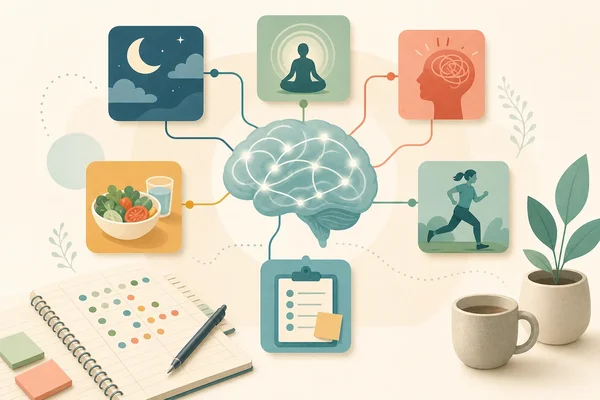
The safer way to think about these experiences is to track patterns. When does fog appear? What kind of task brings it on? Does it improve with sleep, food, movement, fewer notifications, or a smaller first step? Does it get worse during stress? Pattern tracking will not settle the whole question, but it can make the next conversation more useful.

A practical self-observation checklist for adults
If ADHD brain explanations feel familiar, use that recognition carefully. The goal is not to label every hard day. The goal is to notice whether a recurring pattern is affecting work, relationships, home life, money, school, health, or emotional well-being.
Try writing down a few examples under these prompts:
- Attention: Where do you lose focus even when the task matters?
- Activation: Which tasks are hardest to begin without urgency?
- Time: Do you underestimate how long routine tasks take?
- Memory: What do you forget unless it is visible or repeated?
- Impulsivity: Where do you act, spend, speak, or switch too quickly?
- Emotion: Do frustration, rejection, or overwhelm rise faster than expected?
- Sleep and energy: Are your focus problems tied to poor rest or irregular rhythms?
- Settings: Do these patterns appear in more than one part of life?
Then look for supports that match the pattern. A person who loses track of time may need visible timers and smaller work blocks. A person who forgets hidden tasks may need external reminders. A person who crashes after intense focus may need planned recovery. These are not personality fixes. They are ways of reducing friction between the brain's regulation systems and the demands of daily life.
Turning ADHD brain knowledge into a next step
Learning about the ADHD brain can be relieving because it gives language to patterns that may have felt personal or confusing. It can also be tempting to jump from recognition to certainty. Try to stay in the middle: take your experience seriously, but keep room for other explanations and professional guidance.
A calm next step is to gather examples, review how long the pattern has been present, and consider whether it affects more than one setting. If you want a private way to organize that first layer of reflection, a private adult ADHD screening starting point can help you notice attention and impulsivity patterns before deciding whether to seek a formal evaluation. Screening is a beginning, not a clinical decision, and any important concern deserves a conversation with a qualified professional.
FAQ
What does ADHD do in the brain?
ADHD is linked with differences in brain systems that support attention, planning, motivation, impulse control, emotional regulation, and task switching. These differences are usually discussed as patterns across groups, not as a simple marker that appears the same way in every person.
What do ADHD brains struggle with?
Many people with ADHD struggle with executive functions: starting tasks, staying organized, managing time, holding details in working memory, resisting distractions, and pausing before acting. The exact mix varies. Some people mainly notice inattention, while others notice restlessness, impulsivity, or both.
Can you see ADHD on a brain scan?
Brain scans can help researchers study ADHD-related patterns, but they are not a stand-alone clinical answer for an individual. Everyday assessment relies on symptom history, functioning across settings, childhood onset, duration, and possible alternative explanations.
Is brain fog a symptom of ADHD?
Brain fog is a common way people describe mental sluggishness or clutter, and it can happen alongside ADHD. It can also come from sleep problems, stress, mood disorders, medical issues, or medication effects. Tracking timing and triggers can help clarify what might be contributing.
How long does ADHD burnout last?
There is no fixed timeline. A brief overload may improve with rest and reduced demands, while a deeper burnout pattern may last weeks or longer. If exhaustion is persistent, worsening, or affecting safety, work, relationships, or basic care, it is wise to seek professional support.
Why do people with ADHD sleep so much?
Some people sleep more because of mental fatigue, irregular routines, low stimulation, delayed sleep schedules, coexisting depression or anxiety, or sleep disorders. Excessive daytime sleepiness should not be assumed to be ADHD alone, especially if it is new, severe, or interfering with daily life.
What part of the brain is affected by ADHD?
ADHD is not limited to one part of the brain. Research often discusses the prefrontal cortex, striatum, attention networks, reward pathways, and neurotransmitter systems such as dopamine and norepinephrine. The daily result can involve attention, motivation, organization, and impulse regulation.