ASRS Test Guide: ADHD Time Management Strategies for Adults
Ever find yourself scrolling for an hour when you only meant to check one email? You're not alone. If completing simple tasks feels like running a marathon with no finish line in sight, you might recognize these struggles from your ASRS test results. As an ADHD assessment resource, we understand that ADHD time management challenges go deeper than simple disorganization—they're neurological patterns requiring tailored solutions. This guide helps transform your ASRS insights into actionable systems designed for ADHD brains.
Understanding Your ASRS Results Through a Time Management Lens
The Adult ADHD Self-Report Scale (ASRS) doesn't just measure attention—it reveals how your brain interacts with time itself. When considering your results through this crucial lens, patterns emerge that standard productivity advice fails to address. Take the free ASRS test to understand your unique profile.

How ASRS Inattention Questions Impact Time Perception
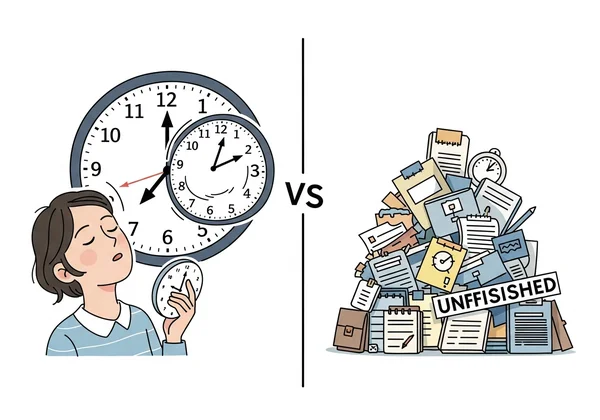
Time blindness—the inability to accurately gauge time passing—is a common experience for adults with ADHD. Those ASRS questions about forgetfulness and distractibility? They directly correlate with:
- Underestimating task duration ("I'll just quickly check email" becomes 90 lost minutes)
- Missing deadlines despite good intentions
- Chronically underestimating travel and transition times
Many ADHD brains lack the internal metronome neurotypical people rely on. That's why traditional planners often fail—they assume you can reliably predict how long things take.
Hyperfocus and the Time Paradox
The ASRS captures the dual nature of ADHD focus perfectly. While questions about distractibility point to time blindness, hyperfocus—becoming so absorbed in a task that hours disappear—is the other side of the coin. Our AI-generated reports help identify which tasks might trigger your hyperfocus states, helping you harness this superpower intentionally rather than accidentally losing an evening to a new hobby.
Time Management Systems Built for ADHD Brains
Standard productivity systems often assume consistent attention and motivation. Here, we focus on strategies that acknowledge your ASRS symptom profile—whether you scored higher in inattention or hyperactivity.
Externalizing Executive Function After Taking the ASRS Test
Your brain may struggle with prospective memory (remembering to remember). Combat this by making time a physical, external force:
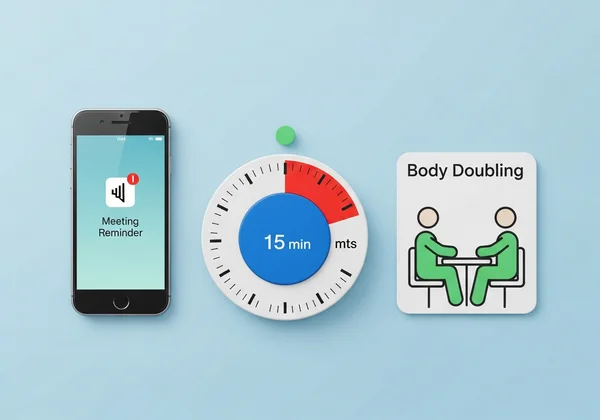
- Visual Timers: Use tools with disappearing color disks that show elapsed time visually.
- Body Doubling: Partner with accountability partners to maintain focus and accountability during work sessions.
- Sensory Alarms: Use vibration alerts on a watch or phone to prevent the jarring overstimulation that can come from loud alarms.
External supports are known to significantly improve daily functioning for adults with ADHD, a principle that guided the creators of the ASRS scale.
Chunking and Time Blocking Strategies
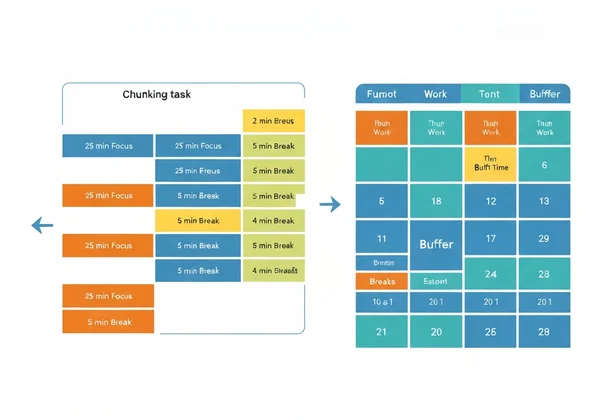
Break down a vague task like "work on project" into small, manageable pieces:
🕒 25-Minute Focus Sprints:
- Set a timer for 25 minutes.
- Give yourself permission to hyperfocus on one small task.
- Take a mandatory 5-minute movement break when the timer goes off.
📆 Reverse Time Blocking:
- Schedule rest, meals, and fun activities FIRST.
- Block out realistic transition times between tasks.
- Leave at least 40% of your day as unstructured buffer space.
If your ASRS results show high impulsivity scores, this structured flexibility helps prevent the "all or nothing" thinking that can derail your day.
Creating Sustainable Routines With Your ASRS Insights
Your personalized AI report from our adult ADHD test can highlight which daily patterns need the most reinforcement. These strategies are designed to sync with your unique neural wiring.
Morning Routines That Beat Procrastination
Instead of fighting a delayed sleep phase (common with ADHD), design mornings that respect your natural energy cycles:
🚪 Environment Design:
- Place medication and a glass of water by your bedside.
- Pre-set your coffee maker the night before.
- Lay out your clothes for the next day.
⏰ The 5-Minute Rule: Commit to just five minutes of your most dreaded task. Often, getting started is the hardest part.
Evening Wind-Down Practices
ADHD brains can struggle with task transitions. Create concrete shutdown rituals to signal that the workday is over:
🌙 Transition Cues:
- Use smart lights that automatically shift to warm tones in the evening.
- Play the same "work is done" playlist every day.
- Physically close your laptop and put it away to signal the end of work.
📝 Tomorrow's Preview: Based on your ASRS inattention score, customize your planning:
- High-score → Create a detailed, visible checklist for the next day.
- Low-score → Write your single most important priority on a sticky note.
Your Time Management Journey Starts With ASRS Self-Assessment
These strategies become truly transformative when paired with the self-awareness gained from your ASRS results. Understanding your ADHD symptoms is just the first step—taking action unlocks personalized solutions that actually work.
Julia, 34, shared how her AI report revealed surprising connections: "Seeing how my high hyperactivity score linked to underestimating task durations was a revelation. I now use the time-buffering strategies from my report and finally arrive places on time!"
Ready to take control of your time? Explore your ADHD patterns today with our free, confidential assessment and receive personalized strategies in your AI report.
The Takeaway
What Does ASRS Test About Time Management Challenges?
The WHO-endorsed ASRS evaluates core ADHD symptoms that directly impact time perception and organization, including difficulty organizing tasks, avoiding activities that require sustained focus, and losing items necessary for tasks. Your scores help indicate which ADHD time management resources will prove most effective for you.
How Accurate Is ASRS for Identifying Time-Related ADHD Symptoms?
Validation studies show high sensitivity in detecting time perception and organizational challenges related to ADHD when compared to clinical diagnoses. While not a substitute for a professional assessment, our test effectively screens for symptom patterns that standard productivity tools often overlook.
Can time management strategies really help if I have ADHD?
Absolutely. Research shows that adults with ADHD who implement targeted, ADHD-friendly strategies report significant reductions in missed deadlines, decreased time-related anxiety, and major improvements in task completion. Your personalized ASRS report highlights which techniques best align with your specific symptom pattern.
What age is the ASRS test appropriate for understanding time management issues?
Designed for adults aged 18 and older, the ASRS is an invaluable tool for anyone questioning a potential late diagnosis of ADHD. Time management challenges often become more pronounced in adulthood as responsibilities increase and old coping skills are no longer sufficient. Take the test to uncover how ADHD symptoms may be manifesting at your stage of life.