Female ADHD Symptoms: ASRS Test Differences
For countless women, the daily struggle with focus, organization, and emotional regulation isn't just "stress" or "being sensitive." This persistent, exhausting pattern can affect every aspect of life—from careers and relationships to self-esteem. Could these challenges be signs of ADHD that present in ways textbooks rarely describe?
Many women live with undiagnosed ADHD because their symptoms don't fit the classic, hyperactive stereotype often seen in boys. This article explores the hidden signs of ADHD in women and explains how the Adult ADHD Self-Report Scale (ASRS) can provide the clarity you've been seeking. If you feel misunderstood or overlooked, a confidential self-assessment could be a powerful first step toward understanding. You can begin this journey today with a private, insightful ASRS test.

This guide will help you understand why female ADHD is so often missed and what it truly looks like. We'll discuss how to interpret test results in this context and empower you to take the next step with confidence.
Why Women with ADHD Are Often Misdiagnosed
For decades, ADHD research primarily focused on hyperactive young boys. This created a diagnostic model that often fails to recognize how the condition manifests in girls and women. As a result, many women are told they have anxiety, depression, or are simply "too emotional," while the root cause goes unaddressed.
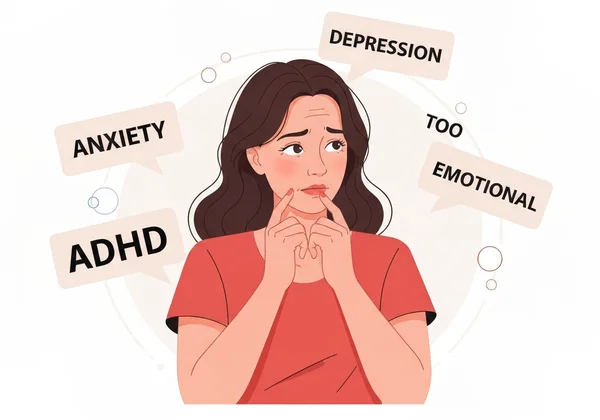
This misdiagnosis is not just a simple oversight; it has profound consequences. Women with undiagnosed ADHD often internalize their struggles, leading to feelings of inadequacy, chronic stress, and burnout. Understanding the reasons behind this diagnostic gap is the first step toward changing the narrative.
The Mask of High Functioning in Women with ADHD
Many women with ADHD become experts at "masking." This involves developing complex coping mechanisms and compensation strategies to hide their symptoms and meet societal expectations. Outwardly, they may appear successful, organized, and on top of everything.
Internally, however, they are often running on empty. This "mask of high functioning" can look like:
-
Perfectionism: Spending excessive time and energy on tasks to avoid making careless mistakes.
-
People-Pleasing: Over-committing to responsibilities to avoid letting others down, leading to burnout.
-
Constant Anxiety: A persistent feeling of being on the verge of dropping the ball, despite external success.
-
Exhaustion: The mental energy required to maintain this facade is immense, often resulting in complete exhaustion at the end of the day.

Because these women appear to be coping well, their underlying ADHD is rarely suspected by others—or even by themselves.
ADHD or Anxiety? The Diagnostic Confusion for Women
The overlap between ADHD and anxiety in women is significant, creating a common point of diagnostic confusion. The constant internal chaos, fear of forgetting important tasks, and social challenges that come with ADHD can easily lead to anxiety. Many doctors may diagnose the anxiety but miss the underlying ADHD that's causing it.
Key differences to consider include:
- Origin of Worry: Anxiety often involves worrying about future events ("what if?"). In ADHD, the "anxiety" is frequently a realistic response to past experiences of missing deadlines, forgetting appointments, or social missteps.
- Restlessness: In anxiety, restlessness is often a nervous energy. In ADHD, it can be a need for stimulation or a physical manifestation of a racing mind.
- Focus Issues: With anxiety, focus can be disrupted by specific worries. With ADHD, distractibility is more generalized and persistent, even in low-stress situations.
Untangling these conditions is crucial for effective treatment. A screening tool can help identify patterns more specific to ADHD. For an initial look at your symptoms, you can start a screening today.
How Female ADHD Symptoms Manifest Differently
While the core traits of ADHD—inattention, hyperactivity, and impulsivity—are the same for everyone, their expression can vary dramatically between genders. In women, many of these symptoms are directed inward, making them less obvious to observers.
Recognizing these subtle manifestations is key to self-awareness and seeking the right support. It helps reframe behaviors you may have been criticized for as potential symptoms of a neurodevelopmental condition, not character flaws.
Internal Hyperfocus vs. External Restlessness
When people think of hyperactivity, they often picture a child who can't sit still. In women, this hyperactivity is frequently an internal experience. It’s not about running around the room; it's about a mind that never stops running.
This can manifest as:
- A Racing Mind: Having multiple streams of thought at once, making it hard to relax or fall asleep.
- Verbal Processing: Talking excessively or interrupting others, not out of rudeness, but as a way to process thoughts aloud.
- Fidgeting: Engaging in small, repetitive movements like foot-tapping, hair-twirling, or skin-picking.
- Hyperfocus: The flip side of inattention is the ability to become completely absorbed in a task of high interest, losing all track of time. While it can be a superpower, it can also lead to neglecting other important responsibilities.
Emotional Dysregulation: The ADHD Symptom Women Rarely Discuss
One of the most impactful yet under-discussed symptoms of ADHD in women is emotional dysregulation. This isn't about being "overly emotional"; it's a neurological difficulty in managing the intensity and duration of emotional responses.
This symptom can appear as:
-
Intense Mood Swings: Experiencing rapid shifts in mood that seem disproportionate to the situation.
-
Rejection Sensitive Dysphoria (RSD): Feeling extreme emotional pain in response to perceived criticism or rejection.
-
Low Frustration Tolerance: Becoming quickly overwhelmed and irritable when faced with obstacles or tedious tasks.
-
Emotional Outbursts: A tendency to feel emotions so intensely that they "spill over" into tears or anger.

These emotional challenges are often mistaken for a mood disorder, but when they occur alongside inattentive or hyperactive traits, they can be a strong indicator of ADHD.
ASRS Test Results: What Different Scores Mean for Women
The ASRS is a valuable screening tool developed by the World Health Organization (WHO) to help adults identify potential signs of ADHD. However, since many questions were designed around more traditional, male-centric symptoms, women need to interpret their results with nuance. An initial screening can be a great starting point for self-reflection, and our confidential tool is available to help you begin.
Decoding Your ASRS Score: Male vs. Female Patterns
On the ASRS test, you rate how frequently you experience certain symptoms. A high score in Part A often suggests that ADHD is likely and a professional evaluation is recommended. However, a woman might not score "high" in the traditional sense and still have significant ADHD-related impairments.
Consider these patterns:
- "Sometimes" vs. "Often": A woman masking her symptoms might answer 'sometimes' to many questions rather than 'often.' The frequency of these 'sometimes' responses can be just as significant as 'often' answers, indicating a widespread but managed struggle.
- Hyperactivity Questions: Questions about being "on the go" or "driven by a motor" may not resonate with a woman whose hyperactivity is purely internal. She might score low in this area but still experience a constantly racing mind.
- Internalized Symptoms: A woman’s score may be driven by questions related to making careless mistakes, losing things, or feeling overwhelmed—all signs of inattention and executive dysfunction.
It's not just about the final number. The pattern of your answers provides crucial insight.
Case Studies: How ASRS Revealed ADHD in Women with "Normal" Scores
Experience shows that the ASRS can be a turning point, even for those with seemingly borderline scores.
Consider "Anna," a 32-year-old marketing manager who felt like an imposter at work. She was known for her creativity but struggled to meet deadlines and organize projects. She took an online ASRS test and her score was just below the typical threshold for a "positive" screen. However, our AI-powered report highlighted a strong pattern of inattentive symptoms combined with responses indicating emotional sensitivity. This encouraged her to speak with a specialist, who ultimately diagnosed her with Inattentive-Type ADHD.
Or "Maria," a 45-year-old mother who always felt overwhelmed by household chores. She scored low on hyperactivity but high on questions about difficulty finishing tasks and avoiding activities that require sustained mental effort. The test helped her reframe her "laziness" as a symptom of executive dysfunction, leading her to seek strategies that worked for her ADHD brain.
Taking the ASRS Test: Tips for Women Seeking Answers
If you're a woman considering taking an ADHD self-assessment, approaching it with the right mindset can make the results more accurate and helpful. Remember, this is a tool for self-discovery, not a final judgment.
Preparing for Your Assessment: What to Consider First
Before you start, take a moment to reflect. Think about your life "behind the mask." Don't answer based on how you think you should be or how you appear to others. Answer based on how you feel and behave when you're not putting in extra effort to compensate.
Consider your experiences over the past six months across different settings—work, home, and social situations. The goal is to capture your baseline, not your "best day" performance. Being honest with yourself is the most important step.
Maximizing the Accuracy of Your ASRS Results
To get the most out of your ASRS screening, follow these simple tips:
- Answer Honestly: There are no right or wrong answers. This is about your personal experience.
- Don't Overthink It: Go with your first instinct. If a symptom feels familiar, acknowledge it.
- Reflect on Impairment: When a question asks "How often...," think about how much that specific behavior impacts your life, causes you stress, or holds you back.
- Use the AI Report: After completing the test on Asrstest.com, don't just look at the score. Our unique AI-powered report analyzes your specific answer patterns to provide deeper, personalized insights that are especially helpful for identifying the nuanced presentation of ADHD in women. This analysis can help you see your results in a more meaningful light.
Taking the Next Step Toward Understanding Your ADHD Journey
Recognizing that ADHD in women looks different is a monumental step toward self-acceptance and getting the right support. The classic symptoms of hyperactivity and impulsivity don't tell the whole story. Internal restlessness, emotional intensity, and the exhaustion from masking are the silent struggles of millions of women.
An ASRS screening is not a diagnosis, but it is a powerful, evidence-based tool for clarity. It can validate your experiences and give you the confidence and language to have a more productive conversation with a healthcare professional. Understanding your unique symptom profile is the key to unlocking strategies that finally work.
If you see yourself in this article, you are not alone. Taking the first step can feel daunting, but knowledge is power. Empower yourself today by taking a confidential, free ASRS screening.
Start your test now to receive an instant summary and a personalized AI-driven report to begin your journey of discovery.
The Takeaway
Why is ADHD in women so often missed by doctors?
ADHD is often missed in women because their symptoms tend to be more internal (inattentiveness, emotional dysregulation) rather than the external, disruptive hyperactivity seen more often in men. Additionally, women are more likely to develop coping strategies ("masking") that hide their struggles, leading to misdiagnoses of anxiety or depression.
What symptoms of ADHD are different in women compared to men?
While men may exhibit more classic hyperactivity and impulsivity, women often experience internal restlessness, emotional intensity, rejection sensitivity, and hyperfocus on interests. They are also more likely to struggle with disorganization and time management in ways that lead to feelings of being overwhelmed and chronically exhausted.
Can the ASRS test detect ADHD in women when other tests miss it?
The ASRS test is a valuable screening tool for all adults. For women, its strength lies in identifying patterns of inattention and executive dysfunction. Even if a woman doesn't score high on hyperactivity questions, a clear pattern in other areas can strongly suggest ADHD. Using our AI-personalized report can provide deeper insights beyond the simple score, which is particularly helpful for less-obvious cases.
How should I interpret my ASRS results as a woman?
As a woman, it's important to look beyond just the final score. Pay attention to the pattern of your answers. A high number of "sometimes" responses can be just as significant as a few "often" responses. Consider how masking may have influenced your answers and discuss these nuanced patterns with a healthcare professional. To see how your unique patterns are analyzed, try our free tool.
What's the next step after taking the ASRS test?
After taking the ASRS test, use your results, especially a detailed report, as a starting point for a conversation with a doctor or mental health professional. The test provides structured information to help you explain your symptoms clearly. It is not a diagnosis, but it is an invaluable first step toward getting a formal evaluation and finding the right support.